MARCH 2024 FEATURED AUTHOR
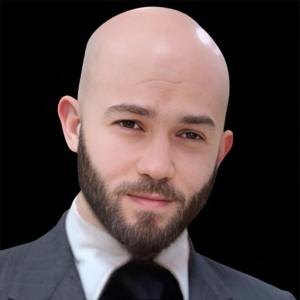
Michael Oka is the author of the autobiographical horror The West Grand Haunting to be released April 20, 2024 (available for pre-order now).
Set in 1980s California, The West Grand Haunting tells the true story about Oka’s experience growing up in a legitimate haunted house and how that experience continued to haunt him up into present-day adulthood. Oka’s master storytelling crafts a story that combines a coming of age tale with pure horror.
The Grand West Haunting is an interesting mixture of memoir and horror. What was it like writing your story of not just growing up, but growing up in a haunted house?
It was an intense and solemn experience. I had to unpack a lot of things to tell the story honestly, and that was just about the personal things in the story. Whatever the thing or things in that house were, they were scary. One instance was scary enough that it gave me nightmares into my adult life. In the waking world, I went back to the house on West Grand a lot, and it was no different when I slept. The nightmares I’ve had about that old place haunted me. When I finally wrote the story right, they stopped and have not since come back.
Do you have any advice for others who may be living in similar circumstances to the one you experienced on Grand West?
I don’t know… and no one really does. I must be careful about saying things like that, because there are a lot of people out there who genuinely believe they understand the afterlife. You hear it all the time—experts on the afterlife. To the best of my knowledge, expertise requires quantifiable, measurable, and repeatable results, all of which, to date, cannot be proven beyond the measure of a doubt. It doesn’t mean the phenomenon isn’t real. It doesn’t mean that these things do not happen. I am an ardent believer… but what should anyone going through this do? Find a priest? An exorcist? Move out? I’m not joking. Long after my family moved out of the house on West Grand, the hauntings continued, and the family that lived there after mine was only too glad to attest as much.
In the book, you mention joining a group that performs paranormal investigations. Can you tell us anymore about that?
You’re talking about the PRD (what would later become the PRDS). The Paranormal Research and Development Society. I didn’t join it. I was one of four founding members. The PRDS still exists today. We do things a lot differently than what you see in most paranormal entertainment television reality shows. For starters, we’re not about scary music and building tension. You won’t find our investigations online. There are no videos online. We don’t jump at sounds, and none of us spook particularly easy. The paranormal isn’t a spectacle or sideshow for us; the goal is our investigations, and the service we provide for clients is peace of mind. Our paranormal society’s logo is a compass, and our slogan remains “…your guiding compass to professional paranormal investigations.”
How long have you been a writer?
Since the sixth grade. Professionally? Arguably, that began in the early 2000s. One of my early books (no longer in publication) was optioned in 2006 by the Robert Evans company. It was shelved. Robert Evans was the head of Paramount Studios back in 1967, and he was responsible for China Town, Black Sunday, Man of a Thousand Faces, and The Fiend Who Walked the West. Before submitting my book for consideration, one of his interns had me read his autobiography, The Kid Stays in the Picture, which, to the best of my knowledge, was the last movie he produced in 2002. Mr. Evans was a visionary, and his contributions to the film industry were enormous. After my work was shelved, if I’m honest, I gave up. One of the most haunting things I remember hearing years later was when a friend’s parent said to me, “…you almost made it.”
That’s always stuck with me. I shouldn’t have given up. My books went out of publication in 2011, and I didn’t sign with that publication company again to renew my books. I wanted the rights to that work back so that maybe one day I could rewrite them bigger and better.
I didn’t do that, either. I picked up the proverbial pen again in October of 2022 after the PRDS went into its shoulder season (winters are generally dead, no pun intended). I wrote The West Grand Haunting on compulsion.
I’ve been writing since I was about ten or eleven, but none ever mattered as much to me as it does now, in my forties.
What inspired you to become a writer?
My sixth-grade teacher. We did not get along. I can’t tell you how many parent-teacher meetings we had or how many times my mother had to meet with her and the principal to demand she stop targeting me (she did). However, we had a project in class one day. We were each assigned the task of writing a poem… but not like “roses are red…”. She wanted a real poem. I can’t remember the words to that poem anymore, but I can tell you it was filled with every ounce of my soul. It was about me, alone, wandering a trail in the forest and finding peace in it. We all turned in our assignments, and she left me a note on the margin when mine returned. “Have you ever considered writing professionally?”
Then, before moving on to the next assignment, we discussed the work a little more as a class, and she stopped in the middle of the assignment and asked if she could read my work to the class. It was the first and only time in my elementary school life that I held the respect of the classroom. People who typically had nothing nice to say to me, even the bullies, were patting me on the shoulder and telling me good job. One of the girls I had a crush on in the class asked me if I wanted to go on a date. I lied and said no (read The West Grand Haunting, and you’ll understand why).
Acceptance. It was a good feeling.
Describe your writing space. What do you need in your writing space to stay focused?
My writing space is wherever I am. Sometimes, it’s my living room floor. Sometimes, the dining room table. It’s a fifteen-minute break at work or a lunch break. It’s me sitting in my car, waiting for my kids to get out of school. It’s sleepless nights in bed. It’s a hiking trail, a local park. Wherever I am, that’s my writing space, especially with what cell phones can do now. What used to be me carrying around ten or fifteen composition notebooks filled cover-to-cover with ideas or entire pages of story outlines (or even full stories I’d have to transcribe later).
My writing space has a hundred descriptions. Home with my wife and kids. On a break at work, in the office, or outside the building. It’s Kings Canyon Falls by the roar of the falls. It’s inside my car (radio optional, it doesn’t matter). I don’t need a dedicated place, and I know that’s not for everyone, but I can’t imagine anything else for me. All I’ve ever known required me to adapt, and I’ve carried that. When there’s a story I want to tell, I will tell it.
What’s the most valuable piece of advice you’ve been given about writing?
None. No one has ever given me valuable writing advice; however, I did hear something that struck me not only as profound, but I live by it. I don’t know if anyone’s ever seen that show “Californication.” It’s probably bad that I can relate to the main character, Hank Moody (played by David Duchovny), but that show hits close to home in so many ways. For a while in the show, he’s teaching a collegiate-level writing class, and he says, “I can’t teach you how to write, and anybody who says the can is full of shit. The only thing I can do is write about the shit that excites me, the shit that gets me hard… don’t be [insufficient] with your emotions, just run it up the flagpole and see who salutes.”
That’s the real stuff, right there. We can take all the advice and technical training in writing fiction, non-fiction, poetry, or whatever… but no one can teach us our voice in writing. No one can teach us how to put those feelings to paper, to make them into living and breathing worlds and characters. Anyone can recount a memory and explain how it made them feel… but blessed is the writer who can make their audience feel it, too. That’s my hope for any of my work, fiction, non-fiction, or anything in between.
Some writer for that show [Californication] really felt that advice, and they spoke those words through the character Hank Moody, and it’s probably the truest thing I’ve ever heard.
Do you have any other publications or upcoming releases we should know about?
Thank God that my other works are out of publication. I began writing them when I was sixteen, and that process continued into my early twenties. They read like a story written by a sixteen-through-twenty-year-old, and the fact that a publisher chose to publish them at all is a testament to why I didn’t sign with them again. Don’t get me wrong, for everything they were not, I did almost have a movie deal. I almost made it. Maybe I’ll write their definitive rewrite one day and re-tell them the right way.
My daughter asked me late February this year, “Dad, why haven’t you ever written anything for us?” She means she and her siblings, of course.
I’d started something for them after my son was born and then just stopped. So that’s what I’m working on right now. It’s witty, funny, and an enormous exaggeration of my teenage adventures. It’s funny and relatable, according to some of my testers. With some tweaking and fine tuning, I think it could have some real value.
I’ve been asked by some people why I haven’t written anything to do with the PRDS, and I probably will do that, too.
How can readers follow you for updates on your upcoming releases?
I’m on almost every social media platform, although admittedly, I favor “Threads.” My facebook page can be found here.
 Madhouse Books Publishing